




Scottish football has a longer history with hair transplants than most people realise. Several well-known players have had them. Some talked about it openly. Others said nothing, but the results were visible enough that the conversation happened anyway.
The shift has been real and gradual. A decade ago this was tabloid territory. Now it barely generates a comment.
Wayne Rooney and How the Conversation Opened Up
Wayne Rooney is not Scottish. He matters here anyway. In 2011 he posted on Twitter that he had had a hair transplant. No PR strategy. No carefully managed disclosure. Just a straightforward statement from one of the most recognisable footballers on the planet, at a point when nobody at his level had done that.
The response was enormous. It shifted the way men across Britain talked about the procedure, including in Scotland. Rooney had significant recession by his late twenties and had FUE to address it. The results were widely photographed over the following years and functioned, in effect, as an extended public demonstration of what the technique could achieve.
For anyone wondering why FUE hair transplant in Glasgow is now the most requested technique by name, Rooney’s very public experience is a large part of the explanation. He had around 1,000 grafts in the initial procedure and returned for further work as loss continued.
Scottish Footballers Who Have Had Hair Transplants
These are the names that come up most often in the Scottish football context.
James McFadden
McFadden is one of the most celebrated Scottish players of his generation. The goal against France in Paris in 2007 is still replayed in highlight reels. He began showing noticeable recession during his playing career and subsequently had a transplant. The change in his appearance across different periods is consistent with hairline restoration work addressing early to mid-stage recession.
Kris Boyd
Scotland’s most prolific domestic goalscorer of his era. Boyd played for Kilmarnock, Rangers, and a string of clubs across a long career. His hair changed noticeably between his early and later playing years, consistent with transplant work addressing recession that developed during that time.
Leigh Griffiths
The Celtic striker had visible hair loss during his time at the club and has since had work done. Griffiths had a high media profile during Celtic’s run of domestic success and the change across photographs from that period is clear.
Barry Bannan
The Sheffield Wednesday captain and Scottish international. Bannan is still playing at a high level. His hairline changed visibly at some point, consistent with transplant work to the frontal and temple areas, which is the most common presentation in men in their late twenties and early thirties.
Steven Fletcher
The Scottish international striker played for Wolves, Sunderland, Sheffield Wednesday and others across a long career. Fletcher’s hairline changed noticeably between different phases of his time in the game, consistent with restoration work addressing recession that had developed in his twenties.
Anthony Stokes
The former Celtic striker had a high profile during the club’s dominant domestic period. The change in his appearance across photographs from different points in his career is consistent with transplant work.
Andy Webster
The defender who represented Scotland and had his best club years at Hearts and Rangers. Webster addressed significant hair loss that had developed during his career. The difference across photographs from different periods in professional football is consistent with FUE-style restoration.
Colin Hendry
Blackburn Rovers’ captain in the Premier League title winning season of 1994-95 and one of the most recognisable Scottish defenders of his generation. Hendry’s distinctive blond hair was part of his public image as a player. He has had a hair transplant, and the work is visible in more recent photographs.
What These Cases Have in Common
Most of these players started noticing recession in their mid-to-late twenties. Androgenetic alopecia is genetic. It does not discriminate based on physical fitness. A player can be in the best condition of his life and still lose hair on exactly the same timetable as someone with the same genetic predisposition who has never trained. Fitness, diet, and lifestyle do not prevent it.
The other thing these cases share is timing. Most had the work done either during a quieter phase of their career or after retiring. Pre-season is the obvious window for active players. The first fortnight post-procedure is the most restricted. After that, light training can resume carefully, and by the time competitive football starts, most of the visible recovery markers have cleared.
Planning is also worth thinking about early. Androgenetic alopecia tends to keep progressing, and a transplant planned at 26 without accounting for future loss can look increasingly incomplete by 35 as surrounding native hair thins further. Our guide to graft counts and session planning covers this in detail, including how donor supply considerations affect younger patients where loss is likely to continue.
Why FUE Is the Standard Choice
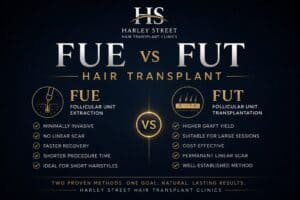
The scar question drives most technique decisions in this group. FUE extracts follicles individually and heals without producing a linear scar in the donor area. FUT, which takes a strip from the donor area, leaves a horizontal scar that is covered by longer hair but becomes visible at shorter lengths.
Most footballers keep their hair short. That makes FUE the practical choice for the vast majority.
The difference between FUE and DHI, the other main variant, is more nuanced and comes down to implantation method rather than extraction. Our guide to FUE vs DHI covers that comparison. Our FUE vs FUT breakdown goes into the scar question specifically if that is relevant to your decision.
The Season Timing Problem
The recipient area is visibly red and scabbed for the first ten to fourteen days. The donor area is tender. Training is off the table for two weeks minimum, and contact sport or heading a ball needs longer than that.
Pre-season is the natural window. Most professional players in Scotland and England have four to six weeks between the end of one season and the start of pre-season training. The first two weeks post-procedure are the most restricted. After that, light training can resume carefully. By the time competitive football begins, most of the visible recovery markers have cleared.
The shock loss phase, where transplanted hairs shed in weeks two to four before regrowing, is not a physical constraint but a cosmetic one. A player whose hair looks thinner in August than it did before the procedure will notice, even knowing it is temporary. Our hair transplant recovery guide covers the full timeline, including what shock loss actually looks like and when it resolves.
The Effect on Scottish Football Culture
The visibility of hair transplants among Scottish players has had a measurable effect on how men here talk about it. We hear it at consultation. Patients mention a player they follow, or a pundit who looked different on television. Something that felt like a private concern becomes something they feel able to ask about.
Glasgow in particular has seen a significant increase in men in their twenties and thirties seeking consultations. The city has a directness about it that helps. People tend to be clear about what they want and why, which makes for a straightforward conversation.
Make the best investment in yourself and find out more about how we can help eliminate hair loss for good!
Frequently Asked Questions
Several well-known Scottish players have had hair transplants, including James McFadden, Kris Boyd, Leigh Griffiths, Barry Bannan, Steven Fletcher, Anthony Stokes, Andy Webster, and Colin Hendry. The changes in their appearance across different periods of their careers are consistent with transplant work addressing recession that developed during or after their playing time.
Yes. Wayne Rooney publicly confirmed his hair transplant in 2011. He had FUE to address hairline recession and subsequently had further procedures as hair loss continued. Though not Scottish, Rooney was the first footballer of his profile to discuss it openly, which shifted the public conversation significantly across Britain.
FUE is the most common choice. The main reason is that FUE does not produce a linear scar in the donor area, which matters for players who keep their hair short. FUT produces a horizontal scar that is covered by longer hair but would be visible at the shorter lengths most players favour.
Light training can typically resume after two weeks. Contact sport, heading, and high-intensity training should wait at least four weeks. Most players time procedures around the end-of-season break to minimise disruption to their schedule.
Yes. Androgenetic alopecia is genetic and can begin in the early twenties regardless of physical fitness or lifestyle. Several of the Scottish players listed above began experiencing noticeable recession during their playing careers. Fitness and diet do not prevent it. The cause is sensitivity to DHT, a hormone derived from testosterone, which is unrelated to activity levels.
Cost depends on the number of grafts required. A hairline restoration addressing early to mid-stage recession typically requires 1,500 to 2,500 grafts. See our hair transplant cost page for a full breakdown of pricing by session size.
Patient Testimonials
Aside from achieving fantastic results, we believe that keeping in touch with our patients before, during and after their hair transplantation procedure is paramount – it helps to keep our patients feeling calm and in control. We’re always on hand to provide guidance, support and aftercare advice. Time and again, our patients tell us that this is what sets us apart from other clinics.
You can read our great reviews of FUE hair transplants over on Google and Trustpilot