




Every procedure at our Glasgow clinic is performed by a doctor on the GMC register
Our clinic is in the heart of Glasgow, a short walk from Buchanan Street subway and Queen Street station
Your surgeon is fully dedicated to your procedure from start to finish
Honest assessment of your donor hair and realistic outcome, no hard sell
Crown hair loss is among the most common patterns seen at our Glasgow clinic, and also one of the most complex to treat well. The crown sits at the back of the scalp, around the vertex whorl point where hair radiates outward in a circular pattern. This area behaves differently from the hairline, both in how it loses density and in how transplanted hair settles after surgery.
This page is written for patients considering a crown hair transplant in Glasgow. It covers why the crown is technically demanding, what realistic graft numbers look like, how we sequence crown work alongside other treatment areas, and what long-term planning looks like when hair loss is still active.
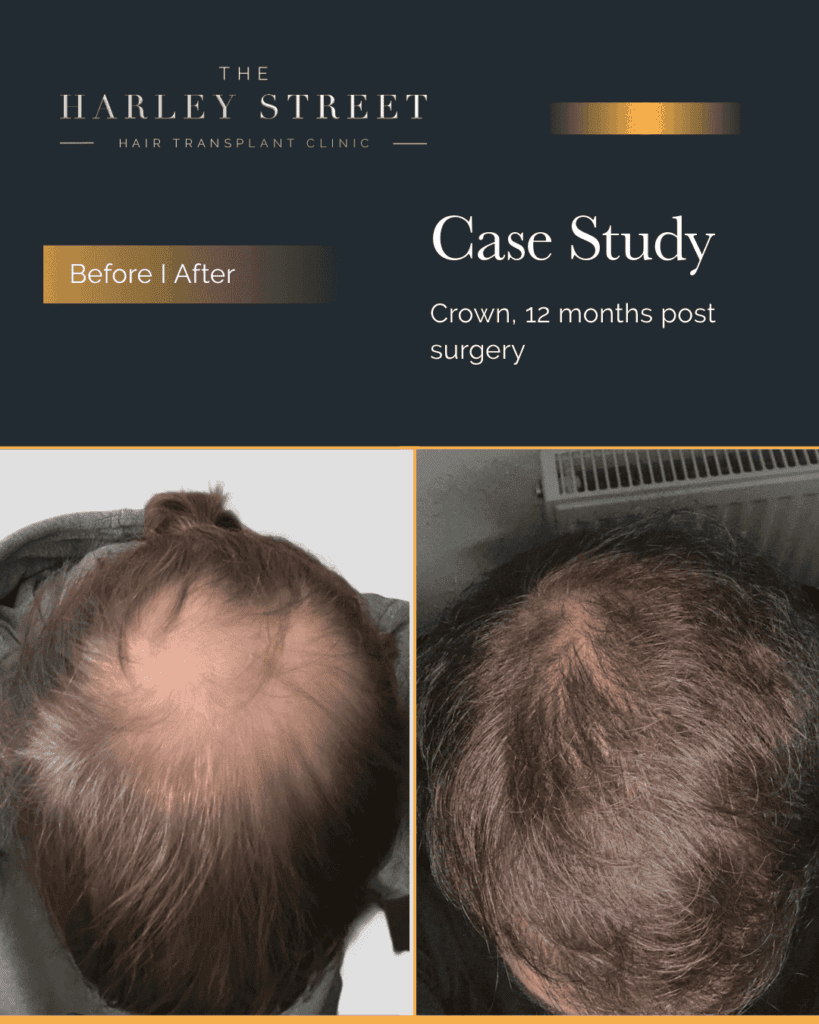
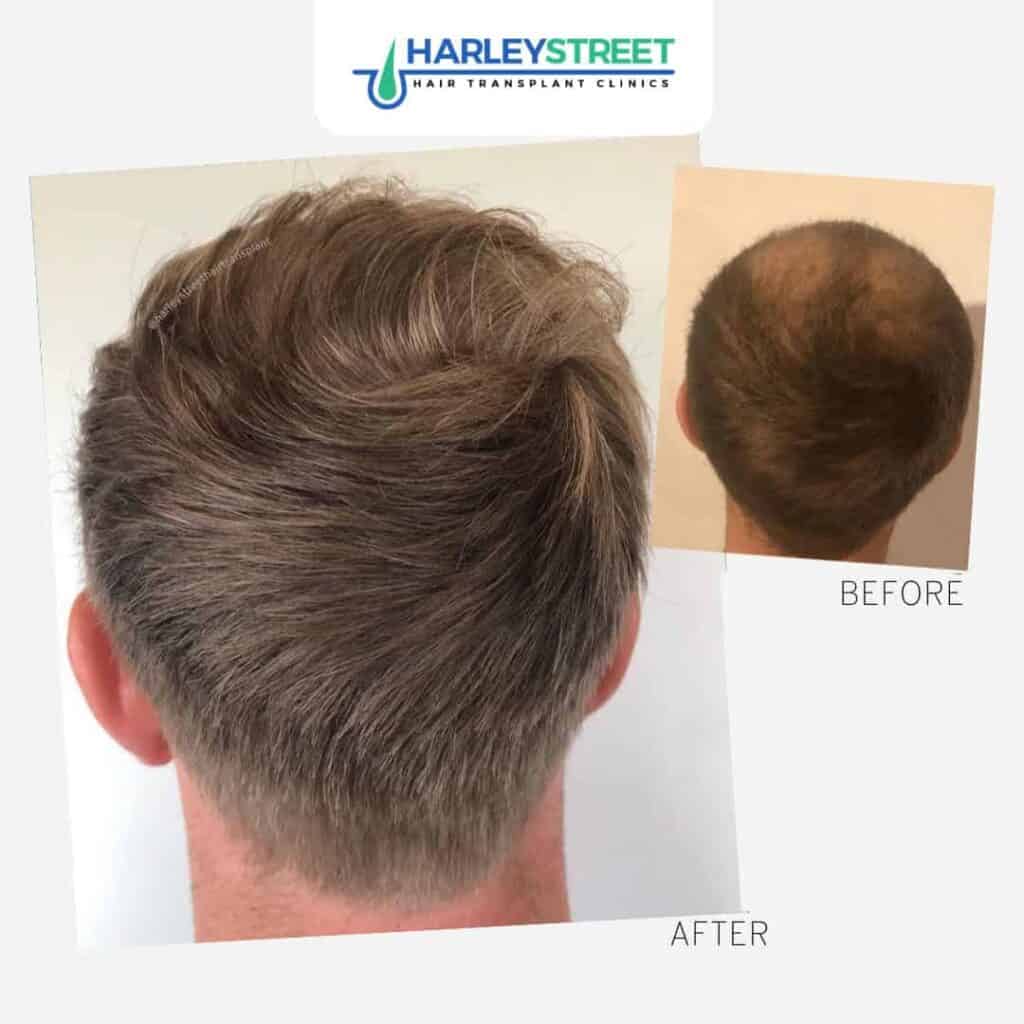
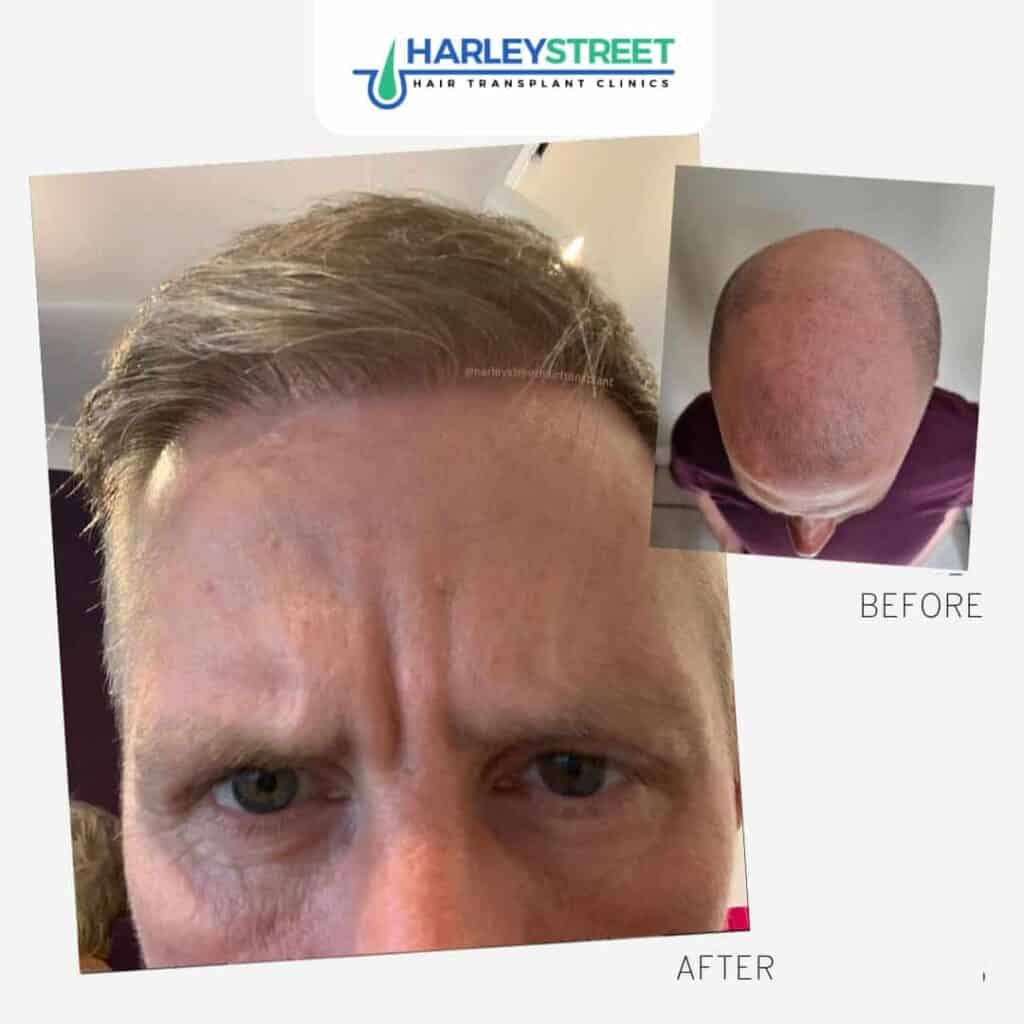
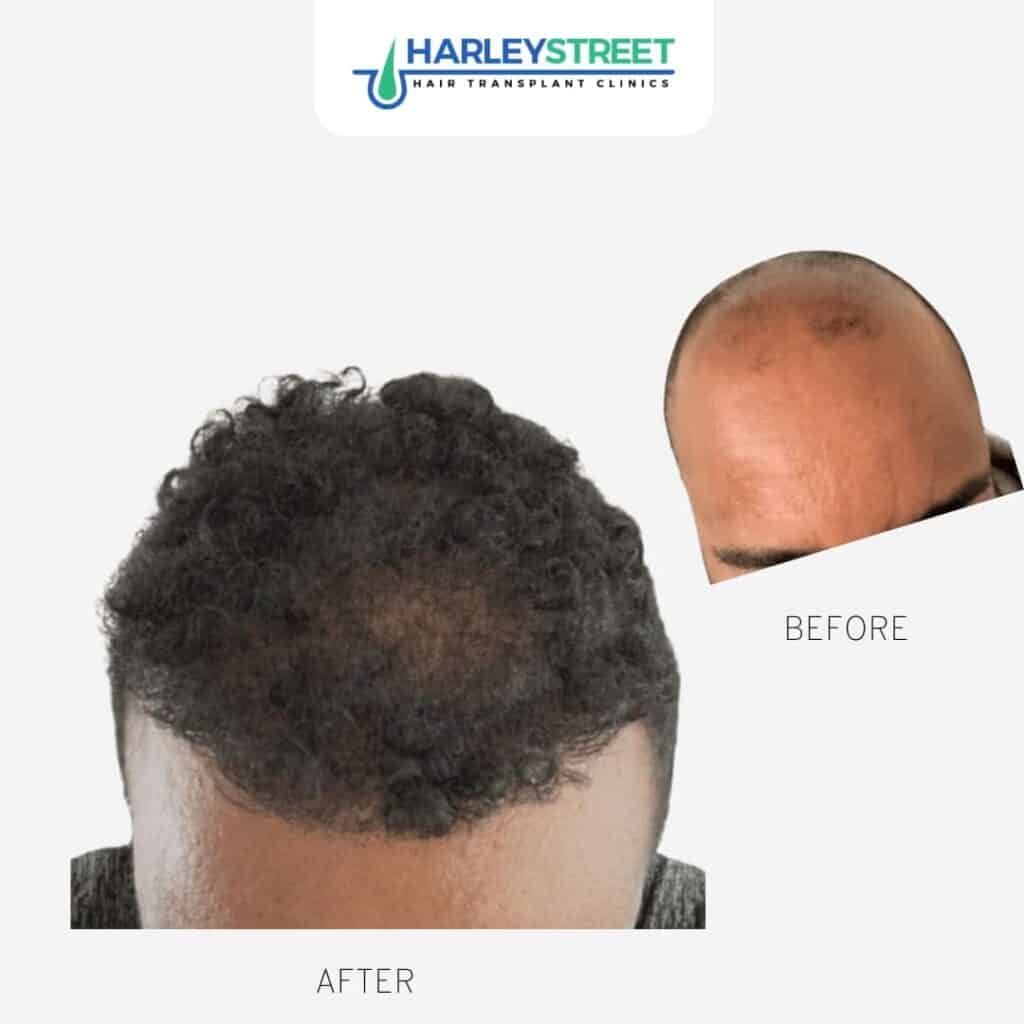
Before and After Crown Hair Transplant Results in Glasgow
A selection of results from patients treated at our Glasgow clinic. All procedures were performed by our GMC-registered surgeons.
Crown Hair Transplant in Glasgow
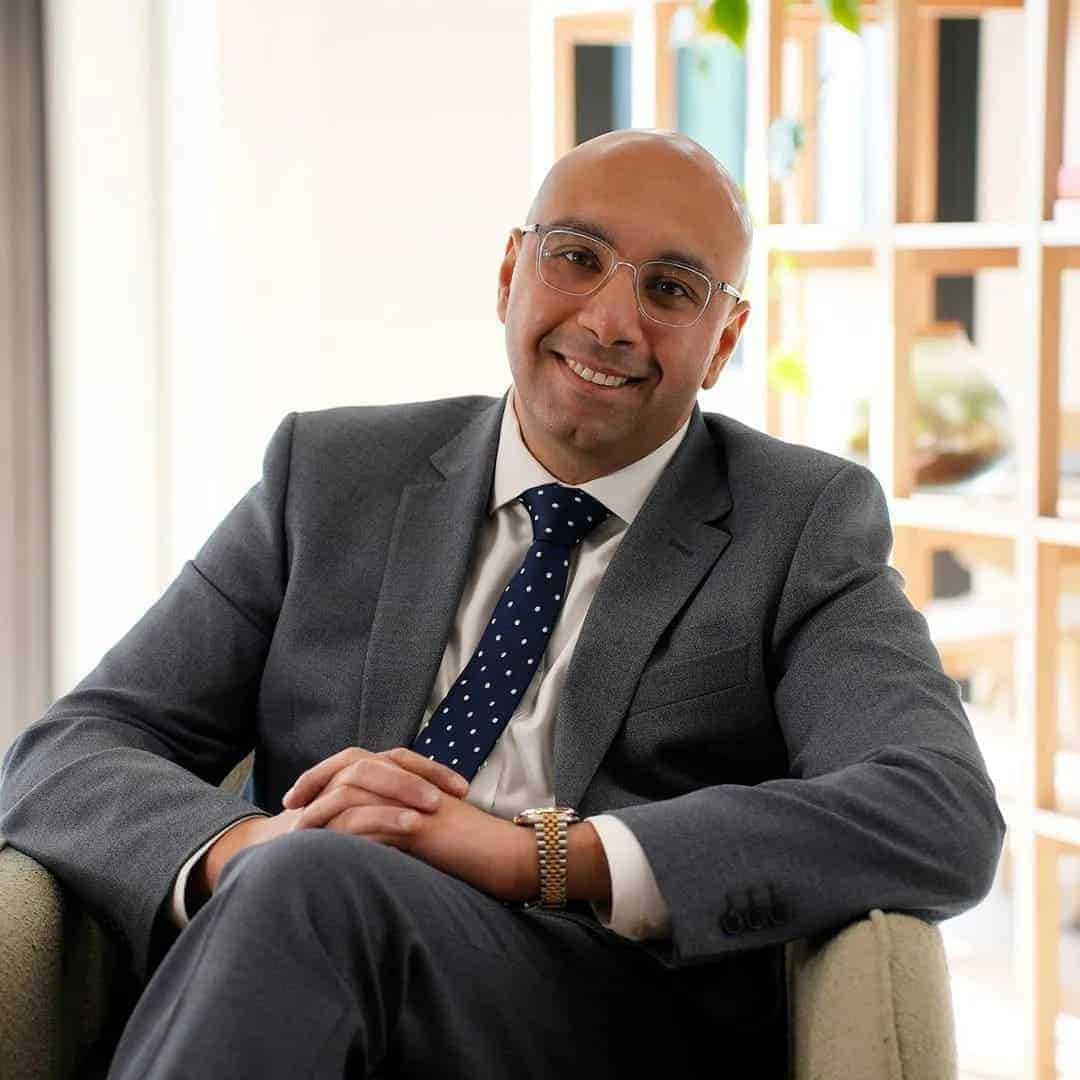
Hair Transplant Glasgow is based at 69 Buchanan Street in the city centre, a short walk from Buchanan Street subway station and both mainline rail terminals. Crown procedures at our clinic are performed by Dr Aziz Elgindi or Dr Mohammed Ditta, both of whom have extensive experience in vertex transplantation and understand the specific challenges of restoring this area of the scalp.
Patients travel to our Glasgow clinic from across Scotland, including Edinburgh, Aberdeen, Dundee, and Inverness, for crown hair restoration. A free initial consultation is available to all new patients, at which point your surgeon will assess your hair loss pattern, donor supply, and whether a crown procedure is appropriate at this stage of your hair loss.
Why the Crown Is Different from Other Hair Loss Areas
Patients often assume that treating the crown is straightforward, as the area of thinning is clearly visible and the donor zone is nearby. In practice, the crown presents a number of challenges that make it one of the more demanding areas to restore.
Hair loss here tends to be progressive
Crown loss in men typically follows male pattern baldness driven by DHT sensitivity. Unlike the hairline, which often stabilises at a certain point, the crown can continue expanding across the vertex and into the mid-scalp for many years. Transplanting into an area that is still actively thinning carries the risk of creating an island of restored density surrounded by future loss if the plan does not account for where hair loss is heading.
The radiating growth pattern is difficult to replicate
Hair at the crown does not grow in a uniform direction. It grows outward from a central whorl point, often with a spiral or offset pattern that is individual to each patient. Placing grafts correctly requires the surgeon to match this existing growth direction precisely, as any grafts placed at the wrong angle will look unnatural even with good density.
Crown hair loss looks smaller than it is
Because the crown sits on a curved surface, photos and mirrors tend to compress the apparent size of the thinning area. In consultation, using a scalp analysis tool, the actual surface area is almost always larger than the patient expects. This has direct implications for graft planning.
The Density Illusion: How Many Grafts Does a Crown Transplant Take?
One of the most common surprises for patients is the number of grafts needed to produce a visible result at the crown. The crown is a wide, curved surface. Achieving coverage that looks natural rather than thin requires placing grafts at sufficient density across the whole area, not just the most visible central point.
A moderate crown loss, which might appear as a patch the size of a large coin, can require 1,500 to 2,500 grafts to cover adequately. More advanced crown loss at NW5 or above can require 3,000 grafts or more, often split across two sessions.
The practical consequence of this is that graft allocation has to be considered carefully, particularly when the patient also has hairline recession or mid-scalp thinning. The donor area contains a finite number of viable grafts across a lifetime. Spending a large proportion of the donor supply on the crown at an early stage can leave insufficient coverage for future hairline or mid-scalp needs as hair loss continues.
This is one reason why we discuss your full hair loss history and family pattern at consultation, not just the area you currently want to address.
The Vertex Whorl and How It Shapes Graft Placement
Every patient has a vertex whorl, a central point on the crown from which hair radiates outward. In patients with significant crown loss, this whorl point is often the last area to retain visible hair before the thinning becomes obvious. As the whorl expands outward with progressive loss, the natural growth pattern becomes harder to detect from the surrounding hair.
When restoring the crown, your surgeon begins by identifying the whorl position, which can persist even when surrounding hair has thinned, and designs the recipient site pattern to match it. This means the direction and angle of each incision varies depending on where in the crown it is placed.
At the central whorl, grafts are placed nearly perpendicular to the scalp surface. Moving outward from the centre, the angle progressively flattens and the direction changes to follow the natural radial pattern. Getting this right determines whether the result looks like natural hair growth or like transplanted hair, regardless of density.
This level of precision is one reason why experience with vertex transplantation specifically matters. A surgeon who performs hairline work regularly does not automatically have the same familiarity with crown anatomy and the patterning decisions that vertex work requires.
Should You Treat the Crown or the Hairline First?
This is one of the most common questions from patients who have both hairline recession and early crown thinning. The honest answer depends on your individual hair loss stage, donor supply, and age, but there are general principles that guide our approach.
In most cases, we treat the hairline first
The hairline is the most visible area of the scalp and frames the face. Restoring a natural hairline has the greatest impact on appearance and is often what motivates patients to seek treatment in the first place. The crown, while visible from behind, is less visible to the patient themselves in everyday situations.
From a planning perspective, starting with the hairline also preserves the option to address the crown in a subsequent session with a clear picture of how much donor supply remains. If the crown is treated first and donor supply is more limited than anticipated, the hairline may be difficult to restore to a satisfying standard later.
There are exceptions
Some patients present with crown loss that is clearly more advanced than their hairline, or have personal reasons for prioritising the vertex. In these cases, crown-first planning is considered individually. Patients in their forties and fifties whose hair loss has stabilised are also assessed differently, and treating both areas in sequence or within a planned pair of sessions is often appropriate.
Combined hairline and crown procedures
Where graft numbers allow and hair loss is at a stable stage, it is possible to address both the hairline and the crown across two planned sessions. This requires a detailed discussion at consultation to map out how donor grafts will be distributed across both areas without depleting the long-term supply.
Which Technique Is Used for Crown Hair Transplants?
FUE is the most commonly used technique for crown transplants at our Glasgow clinic. With FUE, individual follicular units are extracted from the donor zone at the back of the scalp and placed directly into the recipient sites created at the crown. The key advantage of FUE for this area is that the surgeon can select the best available grafts from across the donor zone, choosing follicles with the right calibre and curl to suit the crown’s growth pattern.
FUE hair transplant is performed under local anaesthetic and leaves no linear scar. Patients who wear their hair shorter tend to prefer it for this reason, and recovery from the donor area is typically within a week to ten days.
DHI can also be used at the crown, particularly where precise placement is needed around the whorl point. DHI uses a specialised pen device that implants grafts directly without pre-made incisions, giving fine control over depth and angle in the vertex zone.
FUT is an option for patients who prefer not to shave the donor area, including many women presenting with crown thinning and transgender patients undergoing scalp restoration. FUT removes a strip of tissue from the donor zone while leaving the surrounding hair untouched.
Your surgeon will recommend the most appropriate technique at your free consultation, based on your donor characteristics, the extent of crown loss, and your preferences around recovery and scarring.
Crown Hair Transplant Recovery
Recovery after a crown transplant follows the same general timeline as other areas of the scalp, with a few points worth noting specific to this area.
Days 1 to 5
Redness and mild swelling around the recipient area are normal. Because the crown sits at the back of the scalp, patients often find the area easier to protect than the hairline when sleeping. Small scabs form around each graft site and should not be disturbed.
Days 7 to 14
Scabs begin to loosen and shed. Gentle washing can begin within the first few days following specific aftercare instructions from your surgeon. For FUT patients, sutures are removed at around day ten to fourteen.
Weeks 2 to 6: shock loss phase
The transplanted hairs shed from the follicles. This is an expected part of the process. The follicles remain active beneath the skin and will produce new hairs in the months ahead. Some patients also notice temporary thinning of native hair in the surrounding area, which typically recovers.
Months 3 to 6
New growth begins to emerge. In the early stages the new hairs are often fine and grow unevenly, which is normal and resolves over time.
Months 6 to 14
Coverage improves noticeably. The crown tends to take slightly longer to show its final result compared to the hairline, partly because the radiating growth pattern takes time to settle and partly because the surface area is larger. Most patients see a representative result at around twelve months, with final density established by eighteen months.
Crown Hair Transplant Cost in Glasgow
Crown procedures tend to require more grafts than hairline work, which is reflected in the overall cost. Our pricing is consistent across all of our clinics and is based on graft count:
- 1,500 grafts (early crown thinning): £4,500 – £5,000
- 2,000 grafts (moderate crown loss): £5,500 – £6,000
- 2,500 grafts (significant crown loss): £6,000 – £6,500
- 3,000 grafts (advanced crown or combined procedure): £6,500 – £7,000
Where FUT or DHI is the recommended technique, an additional £1,000 applies. Finance options are available. All pricing is confirmed at your free consultation once graft requirements have been assessed. For a full breakdown of our pricing structure, visit our hair transplant cost page.
If you are considering spreading the cost, further details are on our hair transplant finance page.
Are You a Candidate for a Crown Hair Transplant?
Crown transplants are not suitable for every patient, and timing matters as much as technique. The following factors are assessed at consultation:
Stability of hair loss
Patients with actively progressing crown loss may be advised to wait, or to begin medical treatment such as finasteride or minoxidil to stabilise the loss before a transplant is planned. Transplanting into an unstable area risks the result being undermined by continued loss in the surrounding native hair.
Donor supply relative to treatment area
The crown can require a significant number of grafts. A patient with extensive loss across both the hairline and crown will have more treatment area than some donor supplies can fully address. Honest, realistic expectations around coverage and density are central to our approach at consultation.
Age and hair loss trajectory
Younger patients with early crown thinning and a strong family history of progressive loss are assessed conservatively. The goal is to plan a result that continues to look natural as hair loss evolves over the years, not only immediately after surgery.
Women with crown thinning
Female pattern hair loss often presents as diffuse thinning across the crown and vertex rather than the clearly defined patches seen in male pattern baldness. Women can be good candidates for crown transplants, though the assessment differs from male cases, particularly around donor density and the extent of diffuse thinning elsewhere on the scalp. FUT is often preferred for female patients as it avoids shaving the donor area.
To find out whether a crown transplant is the right option for you, book your free consultation at our Glasgow clinic.
Make the best investment in yourself and find out more about how we can help eliminate hair loss for good!
Where to Find Us
Hair Transplant Glasgow is centrally located and easily accessible from across Scotland. Find us in Glasgow City Centre:
Hair Transplant Glasgow
69 Buchanan Street
Glasgow
G1 3HL
Our Glasgow clinic is well connected by public transport:
- Subway: Buchanan Street station (less than 1 minute walk)
- Train: Glasgow Queen Street and Glasgow Central stations (both within 5 minutes on foot)
- Bus: Buchanan Bus Station (5 minute walk)
If you are travelling by car, the clinic is a short drive from the M8 motorway with several car parks nearby, including the Buchanan Galleries multi-storey.
Crown Hair Transplant FAQs
The number of grafts needed depends on the size of the thinning area and the density you want to achieve. Moderate crown loss typically requires 1,500 to 2,500 grafts. More advanced crown loss at Norwood 5 or above can require 3,000 grafts or more, sometimes across two sessions. The crown tends to need more grafts than it appears from photos or mirrors, because it is a wide, curved surface that compresses visually.
In some cases, yes. Where donor supply is sufficient and hair loss has stabilised, it is possible to address both the hairline and the crown in one session or across two planned sessions. The key consideration is how donor grafts are allocated between the two areas. Your surgeon will advise on the most appropriate approach based on your hair loss stage and long-term plan at your free consultation.
Technically, yes. The crown presents specific challenges that the hairline does not. The radiating whorl pattern requires precise angle-matching for each graft, the surface area is larger than it appears, and the area is more prone to progressive loss. A crown transplant planned without accounting for future hair loss can look unnatural within a few years if the surrounding native hair continues to thin. Careful staging and realistic graft planning are both important.
Crown results take longer to mature than hairline results. New growth typically begins at three to four months, but the full result can take twelve to eighteen months to become apparent. The crown’s wider surface area and radiating growth pattern mean that the final density and hair lay take longer to settle compared to the more uniform hairline zone.
A well-planned crown transplant placed by an experienced surgeon should look natural. The key factors are correct identification and replication of the vertex whorl pattern, appropriate graft density for the surface area, and selection of grafts with the right calibre and texture for the crown zone. Poor angle matching or inadequate density planning are the most common reasons crown results look unnatural, which is why surgeon experience with vertex transplantation specifically matters.
The transplanted hair follicles are taken from the donor zone at the back of the scalp, which is genetically resistant to DHT and therefore permanent. Once transplanted, these follicles retain their genetic characteristics and continue to grow throughout your lifetime. The native hair surrounding the transplanted grafts may continue to thin with age, which is why long-term planning and, in some cases, medical treatment alongside the transplant, is part of our approach.
Patient Testimonials
Aside from achieving fantastic results, we believe that keeping in touch with our patients before, during and after their hair transplantation procedure is paramount – it helps to keep our patients feeling calm and in control. We’re always on hand to provide guidance, support and aftercare advice. Time and again, our patients tell us that this is what sets us apart from other clinics.
You can read our great reviews of FUE hair transplants over on Google and Trustpilot