



Every procedure at our Glasgow clinic is performed by a doctor on the GMC register
Our clinic is in the heart of Glasgow, a short walk from Buchanan Street subway and Queen Street station
Your surgeon is fully dedicated to your procedure from start to finish
Honest assessment of your donor hair and realistic outcome, no hard sell
Eyebrow Transplant in Glasgow
Eyebrow transplantation is one of the most technically precise procedures we perform. The follicles are small, single-hair units, and they must be placed at an angle that follows the almost-flat trajectory of natural eyebrow hair. Get that wrong and the result is immediately visible. Get it right and the restored brow is indistinguishable from the original.
At our Glasgow clinic on Buchanan Street, eyebrow transplants are carried out using FUE (Follicular Unit Extraction). Individual follicles are taken from the scalp donor area and placed one by one into the eyebrow region, with each graft positioned to replicate the growth direction and angle of the surrounding brow hair.
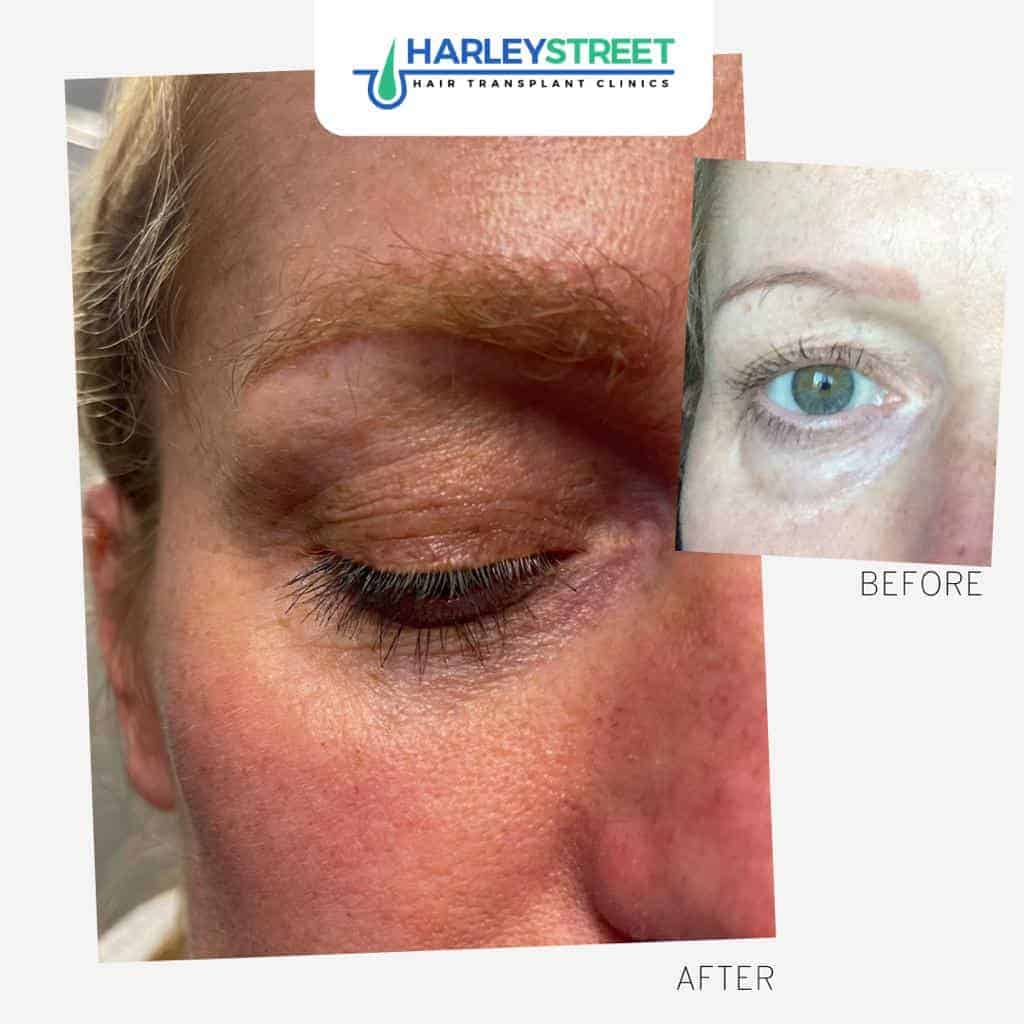
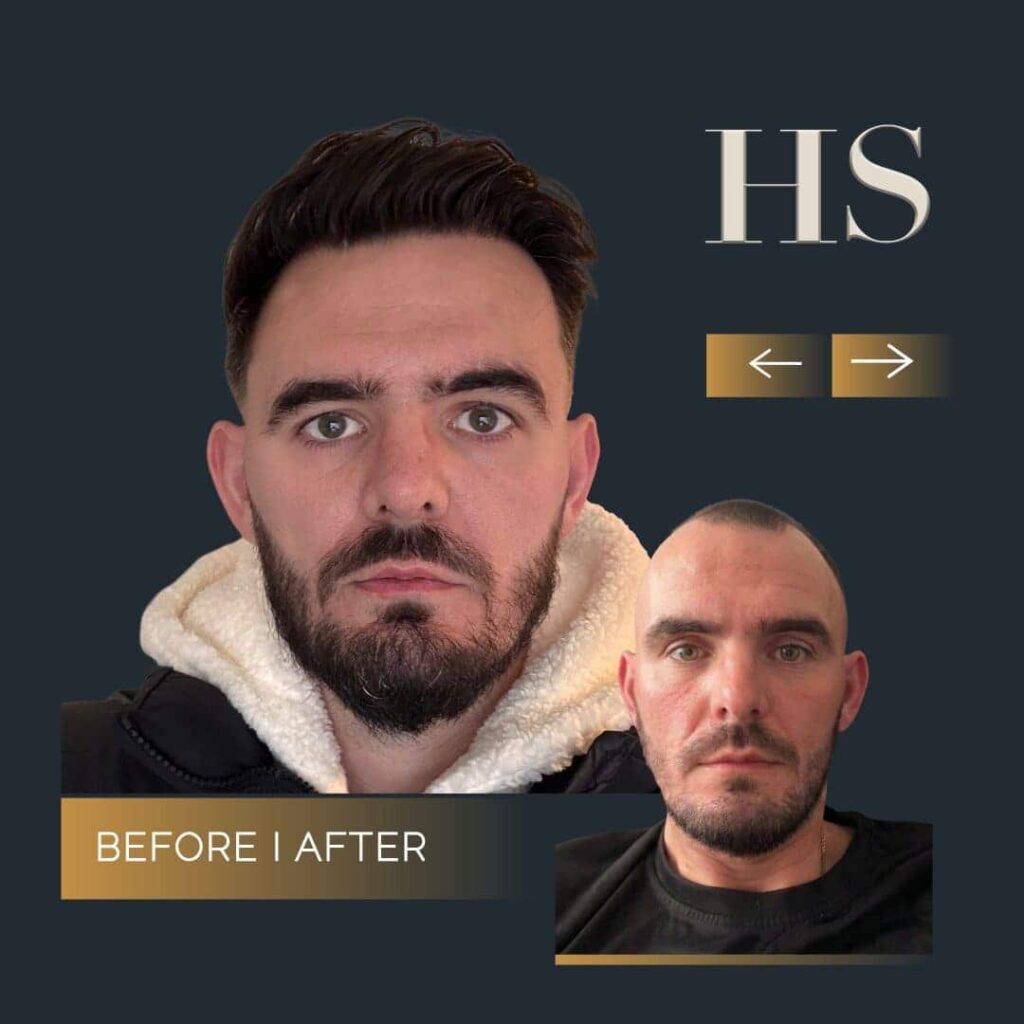
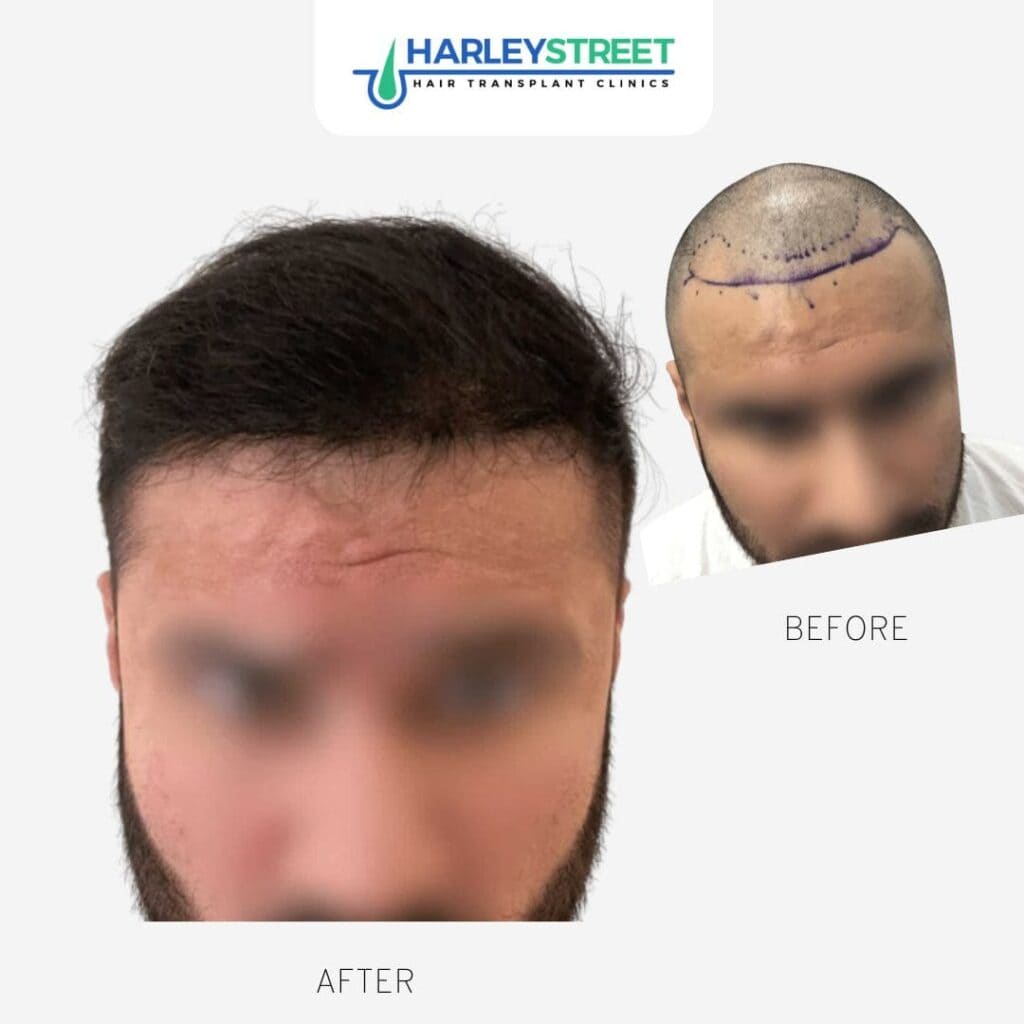
Before and After Eyebrow Transplant Results in Glasgow
A selection of results from patients treated at our Glasgow clinic. All procedures were performed by our GMC-registered surgeons.
What an Eyebrow Transplant Involves
The procedure moves single hair follicles from the scalp donor area to the eyebrow region. Over-plucking is the most common cause we see, but the same technique applies to loss from scarring, alopecia, medical treatment, or eyebrows that have simply always been sparse by genetics.
The critical variable is incision angle. Natural eyebrow hairs grow almost parallel to the skin surface and change direction as they move across the brow. Each follicle must be placed individually at the correct depth, angle, and orientation for that specific point in the eyebrow. That precision is what determines whether the result looks natural.
Why Eyebrow Transplants Require More Precision
Scalp hair transplantation involves a consistent growth angle across large areas. Eyebrow restoration does not. The brow has a structured directional pattern that changes across its length: hairs at the inner edge grow differently from those at the arch and the tail. Each follicle must be placed at the correct depth and angle for its exact position in the brow.
There is less margin for error than in a scalp procedure. Visible irregularities from misplaced grafts cannot be disguised by surrounding hair in the way they might be on the scalp. It is one of the reasons eyebrow transplantation is a specialist procedure rather than a standard add-on.
Who Is a Good Candidate?
The most common patients we see are women whose eyebrows thinned after years of over-plucking, often to the point where the follicles stopped producing hair. Scarring from injury, burns, or previous surgical procedures is also a regular presentation: follicles cannot grow through scar tissue, but donor follicles transplanted into those sites will.
Alopecia affecting the eyebrows, hair loss following chemotherapy, and naturally sparse or asymmetrical brows are all situations where transplantation can help. The underlying requirement in each case is a sufficient donor supply from the scalp. Suitability is assessed at consultation based on your donor density, skin type, and what you want to achieve.
How the Procedure Works
The day starts with the surgeon drawing the proposed eyebrow design and discussing it with you directly before any extraction begins. The shape, position, and density are agreed before grafts are placed. For women in particular, the donor area is shaved in a layered pattern so the surrounding hair covers the site and the shave is not visible once it grows back.
Extraction uses a small punch tool to remove single follicular units from the scalp donor area one by one. Each graft contains one hair. Once extracted, the follicles are held in saline solution while the eyebrow area is prepared.
The surgeon then creates the recipient channels in the brow, each one angled to match the growth direction of that specific part of the eyebrow. The grafts are placed into those channels individually. Angle and depth are controlled at every point because both determine how the transplanted hair grows once the result matures.
The procedure is completed in a single session under local anaesthetic, typically lasting three to five hours. You leave with an aftercare kit and written instructions.
Recovery Time and What to Expect After Treatment
After the procedure, mild redness or swelling around the eyebrows is normal and typically settles within a few days. The transplanted hairs usually shed within the first few weeks. This is a normal part of the hair growth cycle and does not affect the final outcome.
New hair generally begins to grow at around 3 to 4 months, with gradual improvement in thickness and density. Full results can take up to 12 months. Because transplanted eyebrow hair grows like scalp hair, occasional trimming is needed to maintain the desired length.
Eyebrow Transplant Cost in Glasgow
Eyebrow transplants require fewer grafts than scalp procedures, but they are detailed and time-intensive. Each eyebrow typically needs between 300 and 600 single-follicle grafts, and whether one or both brows are being treated affects both the session length and the total cost.
Procedures at our Glasgow clinic typically range from £3,000 to £5,500, with most patients falling in the £4,500 to £5,000 range. The exact figure is confirmed at consultation once the surgeon has assessed your donor density and the coverage you need. Our pricing page covers the full graft-by-graft breakdown, and finance options are available if you prefer to spread the cost.
Eyebrow Transplant vs Microblading
Patients often come to the consultation having tried microblading first, or considering it alongside surgery. The two serve different needs.
Microblading is a semi-permanent tattoo technique that creates the appearance of eyebrow hair by depositing pigment just below the skin surface. It works well for patients who have some existing brow hair and want more definition. It fades over 12 to 18 months and requires top-ups to maintain the effect. It does not restore actual hair growth.
A transplant moves living follicles into the eyebrow area. Those follicles grow permanently. Because they originate from the scalp, the transplanted hairs grow faster than natural eyebrow hair and need occasional trimming, which is the main practical difference patients notice. For patients with significant hair loss or complete absence of brow hair, a transplant is the only option that produces real, permanent coverage. For those with mild thinning and intact follicles, microblading is a reasonable non-surgical alternative.
Make the best investment in yourself and find out more about how we can help eliminate hair loss for good!
Where to Find Us
Our eyebrow transplant clinic in Glasgow is centrally located and easily accessible from across Scotland. Find us in Glasgow City Centre:
69 Buchanan Street
Glasgow
G1 3HL
Our Glasgow clinic is well connected by public transport:
- Subway: Buchanan Street station (less than 1 minute walk)
- Train: Glasgow Queen Street and Glasgow Central stations (both within 5 minutes on foot)
- Bus: Buchanan Bus Station (5 minute walk)
If you are travelling by car, the clinic is a short drive from the M8 motorway and Glasgow City Centre has a range of car parks nearby, including the Buchanan Galleries multi-storey.
Frequently Asked Questions
Yes it is as your own hair is taken from your donor area (the back and sides of your head) and transplanted into your eyebrows. This hair will grow for the rest of your life.
The graft numbers required will depend on if it’s 1 or 2 eyebrows that need a transplant and the size of the surface area of hair loss. As a rough guide, each eyebrow typically needs between 300 and 600 single follicular grafts.
The cost of an eyebrow transplant at our Glasgow clinic depends on the number of grafts required and whether one or both eyebrows are being treated. Procedures involving both eyebrows naturally require more grafts and more surgical time. Eyebrow transplants typically cost between £3,000 and £5,500, with an average in the £4,500–£5,000 range. Your patient advisor will provide a personalised quote following your free consultation.
The initial recovery is straightforward. Mild redness and swelling around the eyebrow area typically settles within three to five days. The transplanted hairs shed within the first two to three weeks. This is normal and does not affect the final result. New growth begins at around three to four months, with meaningful density visible by six months. Full results are typically seen at twelve months.
In some cases, yes. Eyebrow loss due to alopecia areata affecting the brow area can be addressed with a transplant where the hair loss has stabilised. Active or rapidly progressing alopecia may affect the stability of the result. Your surgeon will assess the pattern and activity of your condition at consultation and advise on whether a transplant is appropriate and the likely longevity of the outcome.
Yes. This is one of the key differences between transplanted and natural eyebrow hair. The donor hair is taken from the scalp, so it continues to grow at the rate of scalp hair rather than stopping at a set length as eyebrow hair naturally does. Most patients find they need to trim their eyebrows every two to four weeks to maintain the desired shape and length. This is a minor and routine part of maintaining the result.
Patient Testimonials
Aside from achieving fantastic results, we believe that keeping in touch with our patients before, during and after their hair transplantation procedure is paramount – it helps to keep our patients feeling calm and in control. We’re always on hand to provide guidance, support and aftercare advice. Time and again, our patients tell us that this is what sets us apart from other clinics.
You can read our great reviews of FUE hair transplants over on Google and Trustpilot