




Every procedure at our Glasgow clinic is performed by a doctor on the GMC register
Our clinic is in the heart of Glasgow, a short walk from Buchanan Street subway and Queen Street station
Your surgeon is fully dedicated to your procedure from start to finish
Honest assessment of your donor hair and realistic outcome, no hard sell
Hair Loss in Women in Glasgow
Hair loss affects women of all ages, though it is still widely underdiagnosed and undertreated. At Hair Transplant Glasgow, our team regularly assess and treat women experiencing everything from gradual thinning to more significant hair loss at the temples or hairline. Whether your hair loss is hormonal, structural, or the result of years of tight hairstyles, understanding the cause is the first step toward the right solution.
This page covers the main causes of female hair loss, who is suitable for surgical treatment, and what a women’s hair transplant in Glasgow typically involves.
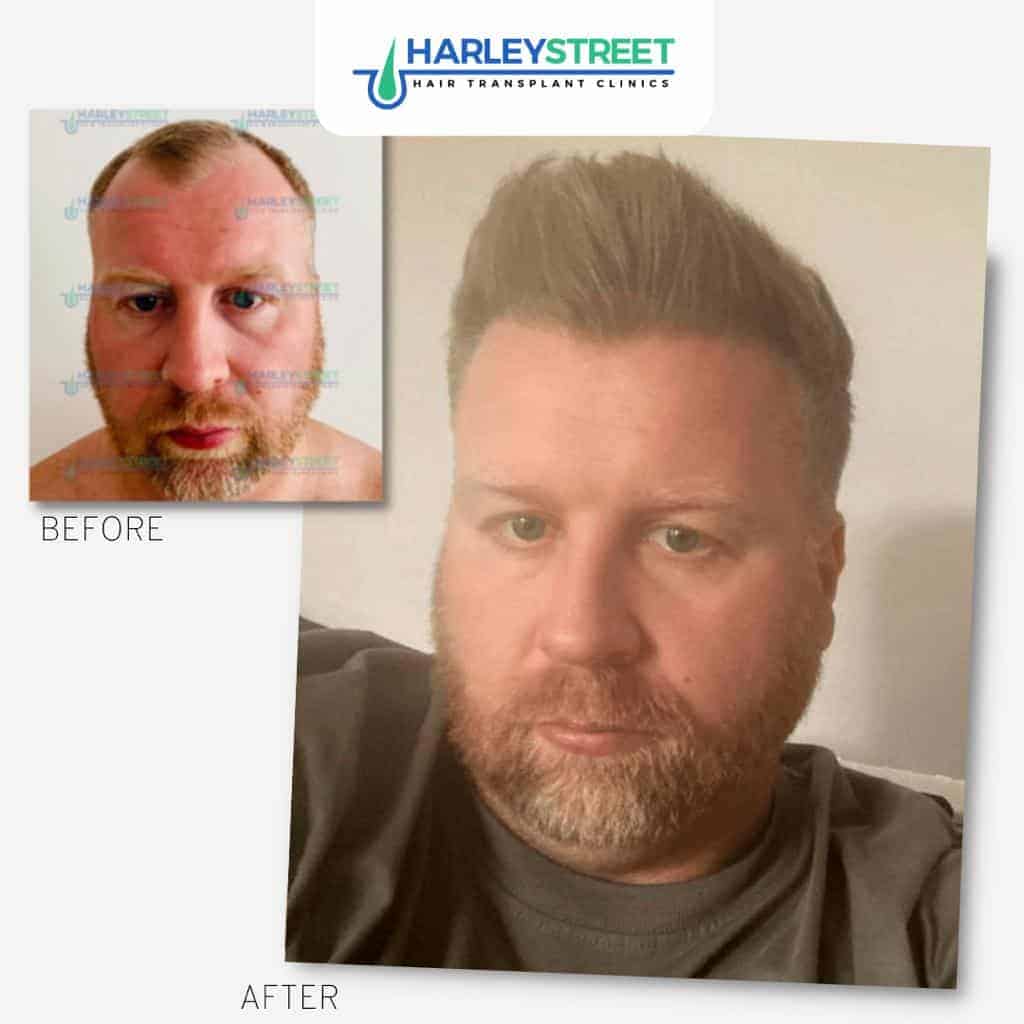
Before and After Hair Transplant Results in Glasgow
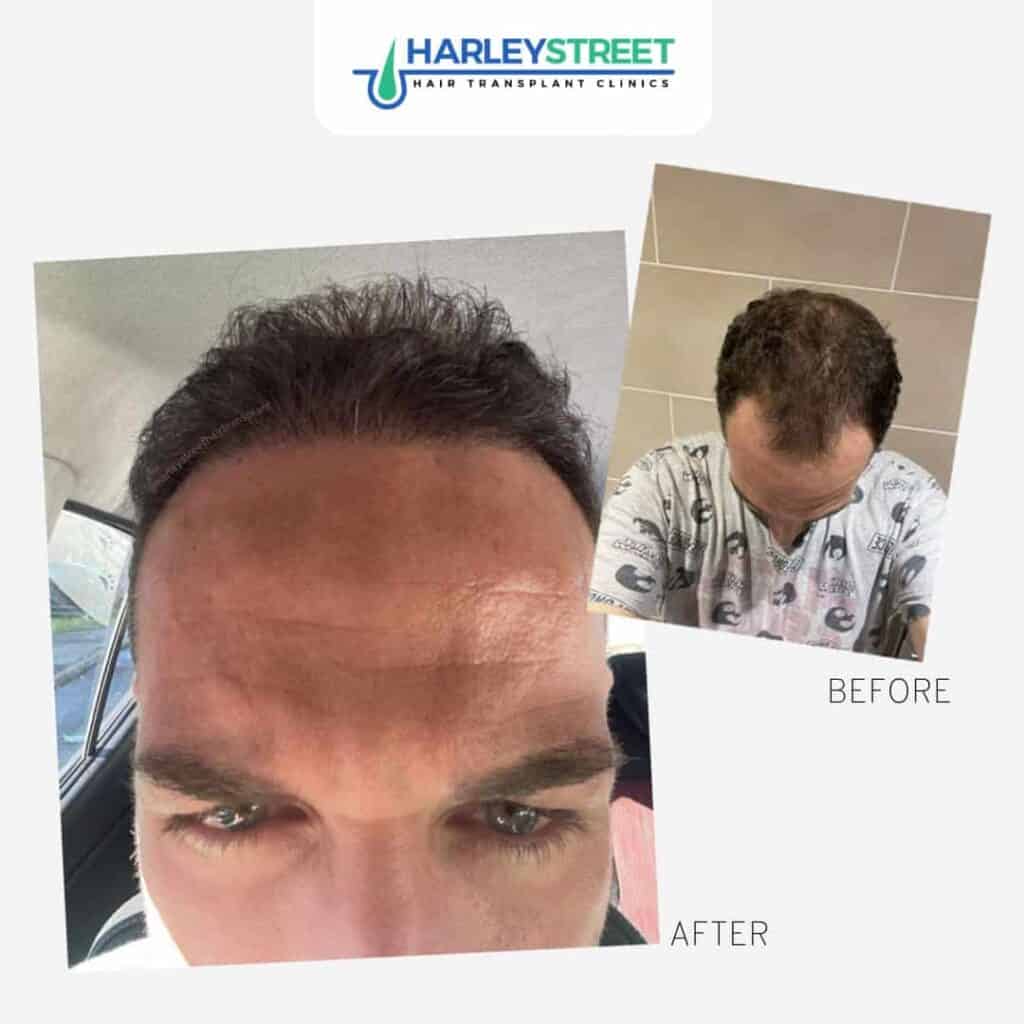
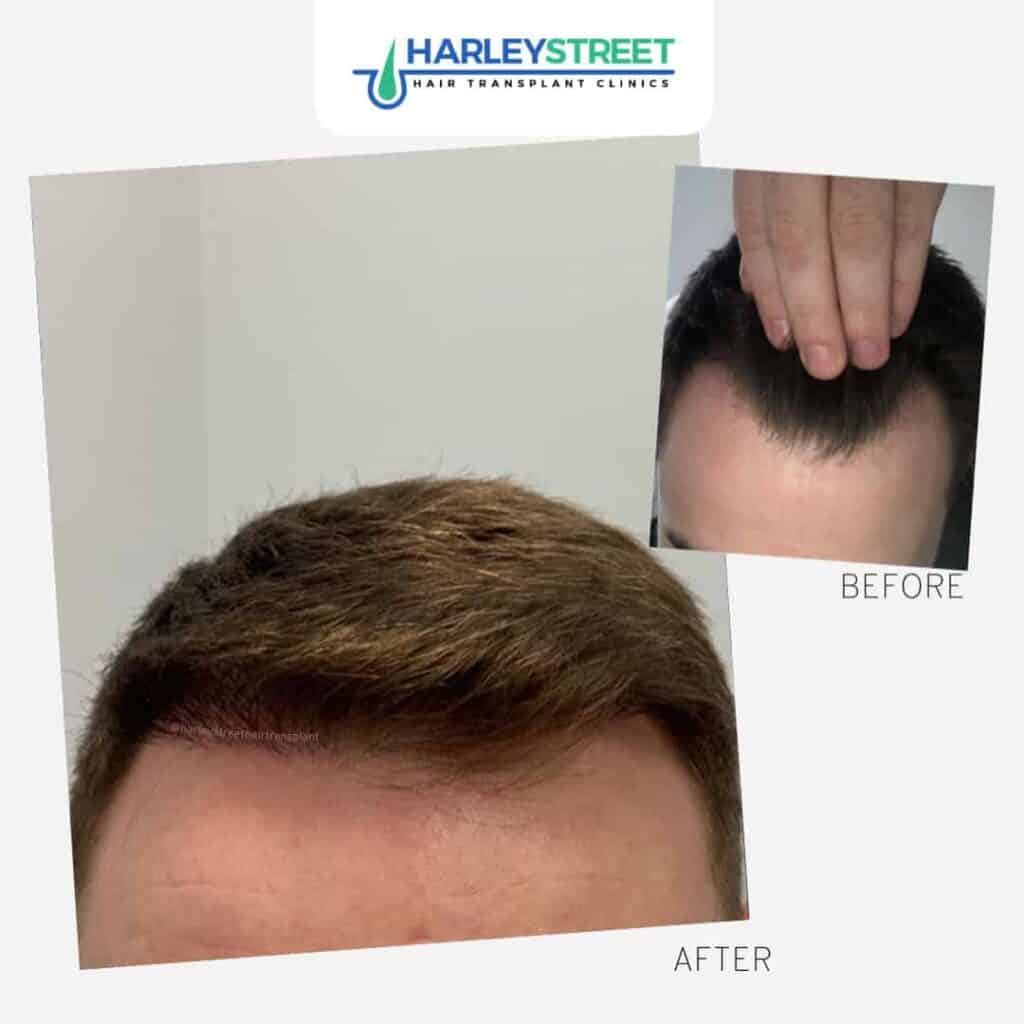
A selection of results from patients treated at our Glasgow clinic. All procedures were performed by our GMC-registered surgeons.
Causes of Hair Loss in Women
It is natural for women to lose around 80 to 100 hairs every day. Persistent or noticeable loss beyond that is often a sign of an underlying condition. The most common types of hair loss in women are:
- Female Pattern Baldness (Androgenetic Alopecia): The most common cause of progressive hair loss in women. Driven by the hormone dihydrotestosterone (DHT), it typically presents as diffuse thinning across the crown and widening of the parting rather than a receding hairline. Menopause, heredity, and hormonal changes after pregnancy can all accelerate it.
- Telogen Effluvium: A temporary shedding condition triggered by a physical or emotional shock to the body, such as illness, extreme dieting, childbirth, or sustained stress. Hair typically sheds six to twelve weeks after the trigger event and in most cases regrows without treatment once the cause is resolved.
- Anagen Effluvium: Hair loss caused by chemotherapy or other treatments targeting rapidly dividing cells. Because hair follicles divide quickly, they are affected alongside cancer cells. Regrowth usually follows once treatment ends.
- Alopecia Areata: An autoimmune condition in which the body attacks its own hair follicles, producing patchy hair loss on the scalp. It can affect women at any age and tends to run in families.
- Traction Alopecia: Hair loss caused by prolonged tension on the follicles, typically from tight hairstyles such as high ponytails, braids, weaves, and extensions. Damage is most common at the temples and hairline. The follicles can recover if the tension is removed early, but long-term or repeated traction causes permanent loss that requires surgical correction.
Can Women Have a Hair Transplant in Glasgow?
Yes. Women are suitable candidates for a hair transplant provided they have a stable area of healthy donor hair, usually at the back and sides of the scalp. The key distinction from male hair loss is that female pattern loss tends to be diffuse, spreading across the whole scalp rather than receding from a defined front edge. This matters because diffuse thinning can also affect the donor zone, which would reduce or eliminate the grafts available for transplantation.
Women with diffuse unpatterned alopecia (DUPA), where thinning is spread evenly including the donor area, are generally not suitable for surgical hair restoration. A thorough scalp assessment is always carried out before any recommendation is made.
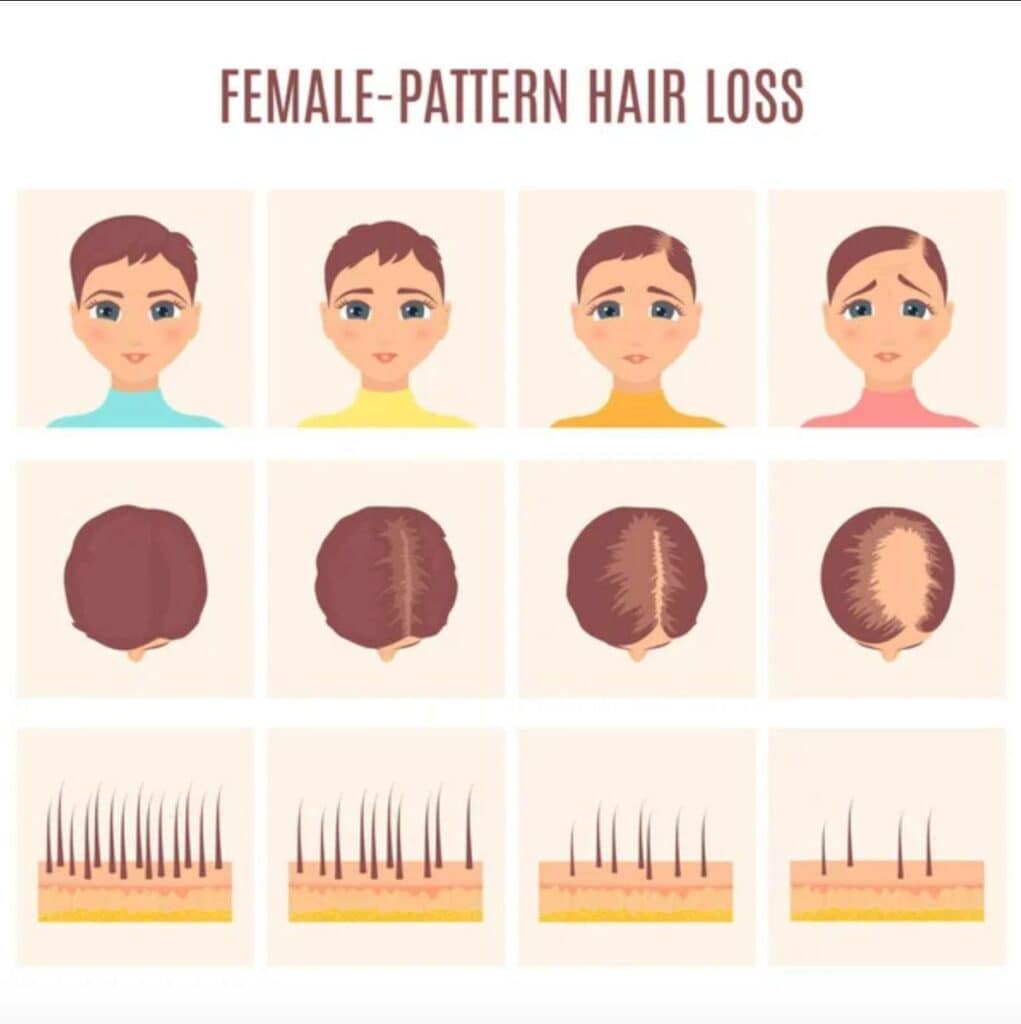
For women with stable patterned loss or localised thinning, the outcome of a hair transplant can be excellent. The Ludwig Scale is a useful reference for staging female hair loss:
- Grade I: Mild thinning at the parting, often the first visible sign
- Grade II: Wider parting and broader thinning across the crown
- Grade III: Marked thinning across the top of the scalp with visible scalp through the hair
Women presenting at Grade I or II are typically the strongest candidates for hair transplant surgery. Our GMC-registered surgeons assess Ludwig grade, donor density, and overall scalp health at your free consultation before making any recommendation.
Women’s Hairline Hair Transplant in Glasgow
One of the most common reasons women seek a hair transplant in Glasgow is not diffuse thinning but a specific issue at the hairline. Two presentations account for the majority of these cases:
A naturally high hairline that a woman has always had and wishes to lower. This is a cosmetic procedure that reduces the distance between the hairline and the eyebrows, creating a more balanced facial proportion. The hairline is redesigned and new follicles are placed to fill the gap.
Traction alopecia at the temples, caused by years of wearing the hair tightly pulled back. The repeated tension gradually damages the follicles at the temple corners, producing a receded or thinned appearance at the sides of the hairline. Once the damaging hairstyle is stopped, a transplant can restore the temple and hairline to a natural position.
Because a woman’s hairline is naturally more rounded than a man’s, there is a larger surface area to cover in order to achieve a feminine and proportionate result. This means female hairline transplants typically require more grafts than a comparable male procedure. The average graft count for a women’s hairline transplant is 2,000 to 2,300 grafts, though this varies depending on the degree of recession and the final hairline design agreed at consultation.
For more detail, see our dedicated hairline hair transplant page.
Menopause and Hair Loss
Hormonal changes during perimenopause and menopause are one of the most common causes of hair thinning in women over 40. The decline in oestrogen and progesterone, both of which support hair growth, combined with a relative rise in androgens, can accelerate follicle miniaturisation and increase daily shedding.
Menopausal hair loss is distinct from other types in its gradual onset and diffuse pattern. It is often mistaken for normal ageing rather than a treatable condition. If thinning has become noticeable in the years around menopause, it is worth having a proper scalp assessment to establish whether medical management, surgical restoration, or a combination would be appropriate.
Hair Loss Treatment Options for Women at Hair Transplant Glasgow
Choosing the right treatment depends on the cause, severity, and whether the hair loss is ongoing or has stabilised. The options we offer or recommend are:
- Minoxidil (topical): The most widely used non-surgical option for female pattern hair loss. Can slow progression and stimulate some regrowth, but results stop when treatment is discontinued and it does not work for all causes.
- FUE hair transplant: Follicular unit extraction, in which individual grafts are removed from the donor area and implanted into thinning zones. Suited to women with patterned loss and sufficient donor density. Our surgeons select the strongest grafts from across the donor area, giving the best possible density per session.
- FUT hair transplant: Follicular unit transplantation, in which a strip of donor tissue is removed from the back of the scalp. FUT is particularly suited to women who do not want to shave the donor area, as the surrounding hair covers the fine linear scar immediately. It is also an option where a high graft count is needed in a single session.
- Nutritional and medical management: Where hair loss is linked to iron deficiency, thyroid dysfunction, or hormonal imbalance, treating the underlying cause with your GP is the essential first step. Surgical restoration is unlikely to succeed if the medical cause is still active.
For a full breakdown of pricing, visit our hair transplant cost page. All consultations are free of charge and your patient advisor will confirm costs following your assessment.
Make the best investment in yourself and find out more about how we can help eliminate hair loss for good!
Where to Find Us
Hair Transplant Glasgow is centrally located and easily accessible from across Scotland. Find us in Glasgow City Centre:
Hair Transplant Glasgow
69 Buchanan Street
Glasgow
G1 3HL
Our Glasgow clinic is well connected by public transport:
- Subway: Buchanan Street station (less than 1 minute walk)
- Train: Glasgow Queen Street and Glasgow Central stations (both within 5 minutes on foot)
- Bus: Buchanan Bus Station (5 minute walk)
If you are travelling by car, the clinic is a short drive from the M8 motorway with several car parks nearby, including the Buchanan Galleries multi-storey.

Frequently Asked Questions
The most common causes are female pattern baldness (androgenetic alopecia), telogen effluvium triggered by stress or illness, thyroid dysfunction, iron deficiency anaemia, menopause, and traction alopecia from tight hairstyles. A diagnosis is essential before selecting a treatment, because the right option varies considerably depending on what is actually causing the loss.
Yes. Women are suitable candidates for a hair transplant in Glasgow provided they have a stable area of healthy donor hair at the back and sides of the scalp and a patterned rather than fully diffuse form of hair loss. Our surgeons carry out a thorough assessment at your free consultation, including your Ludwig grade and donor density, before making any recommendation.
Traction alopecia is hair loss caused by prolonged tension on the follicles, typically from tight ponytails, braids, weaves, or extensions. It most commonly affects the temples and the front hairline. If the damaging hairstyle is stopped early enough, the follicles can recover on their own. Where permanent damage has occurred, a hair transplant can restore the hairline by implanting healthy grafts into the affected area. Our surgeons assess the extent of follicle damage at consultation to confirm suitability.
It depends on the area being treated and the degree of thinning or recession. For a women’s hairline transplant, the typical graft count is between 2,000 and 2,300 grafts. This is higher than a comparable male hairline procedure because a feminine hairline is more rounded, covering a larger surface area. For crown or diffuse thinning, the count varies significantly based on the area of coverage required. Your surgeon will confirm the graft estimate at your free consultation.
Female pattern baldness (androgenetic alopecia) is a progressive condition. Without treatment it tends to worsen over time. It does not reverse on its own. Minoxidil can slow or stabilise the loss in some patients. For suitable candidates, a hair transplant offers a permanent solution by restoring hair to thinning areas using follicles that are resistant to the hormonal process driving the loss.
It can, if the tension is removed early before permanent follicle damage has occurred. Stopping the tight hairstyle that caused the problem gives the follicles the best chance of recovery. However, where the follicles have been damaged over many years, regrowth is unlikely without surgical intervention. A scalp assessment will help determine whether your follicles are still active or whether a transplant would be needed to restore the area.
Patient Testimonials
Aside from achieving fantastic results, we believe that keeping in touch with our patients before, during and after their hair transplantation procedure is paramount – it helps to keep our patients feeling calm and in control. We’re always on hand to provide guidance, support and aftercare advice. Time and again, our patients tell us that this is what sets us apart from other clinics.
You can read our great reviews of FUE hair transplants over on Google and Trustpilot